Most bedtime stories have a hero your child follows from the outside. They listen to what happens to someone else. But what if the hero was your child — their name, their face, the things they love?
This is not just a fun idea. Research shows it changes how children listen, what they feel, and what they remember.
What Happens in a Child's Brain During a Story
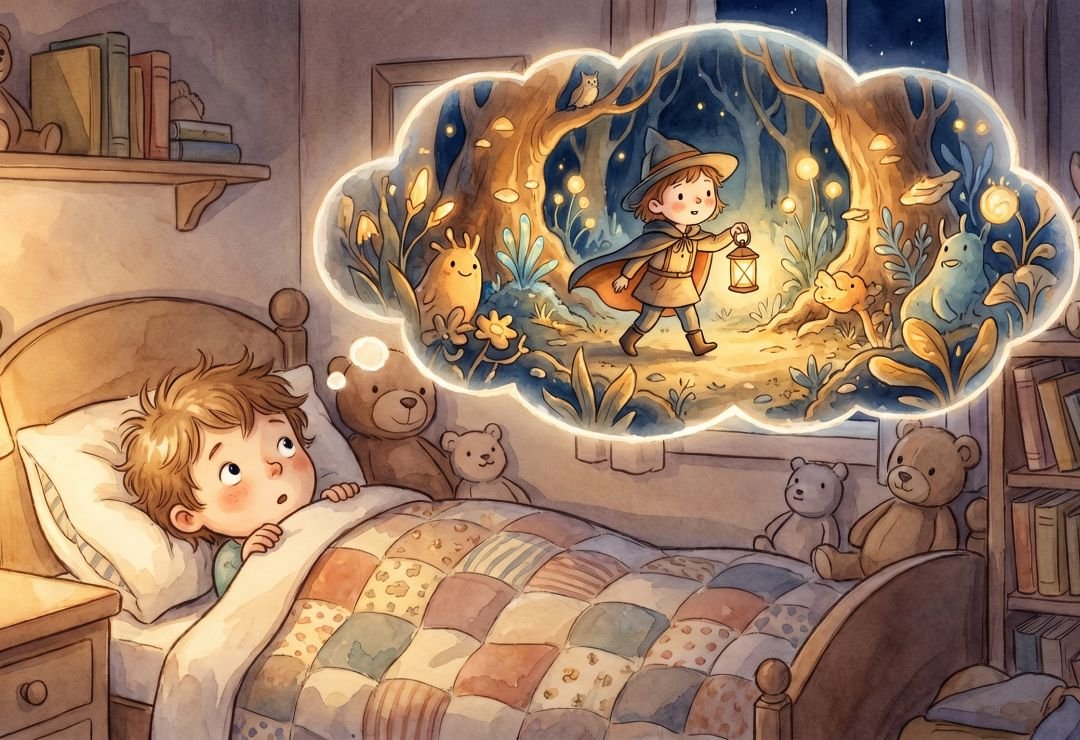
When a child hears a story, their brain does more than process words. It simulates the experience. This means the brain reacts as if the events are actually happening — not to a character, but to the child listening.
Scientists call this narrative transportation. It is the moment when a person stops being a listener and starts being inside the story. Research published in Discourse Processes found that when people are deeply transported into a story, their beliefs about themselves can shift — even temporarily. A child who hears a story about a character who faces fear and finds courage can walk away feeling a little braver.
This works best when the character feels close to the child. The smaller the gap between "that is someone else" and "that is me", the stronger the effect.
Why Being the Hero Is Different From Just Hearing About One
There is an important difference between a child who likes a character and a child who *is* the character.
A study reviewed in Educational Psychology Review explains that children learn more from stories when they can identify with the characters. Identification means the child sees themselves in the character — same name, same fears, same interests. When that happens, the emotional and educational impact of the story goes up significantly.
Research by psychologist Caren Walker, covered by KQED MindShift, found that children apply lessons from stories more easily when the character is close to real life. An abstract animal carrying a moral message is harder for a child to connect to than a character that looks and acts like them.
Three things happen when your child is the hero:
- They pay more attention. It is hard to stop listening to a story about yourself. Children who normally get distracted stay focused when the story is about them.
- They process emotions more safely. When the hero faces something hard — a new school, a fight with a friend, a fear of the dark — the child goes through that experience at a safe distance. They feel it, but they are not overwhelmed by it. This is one of the reasons stories have always been used to help children deal with difficult feelings.
- They remember the lessons. Research from Mrs Wordsmith shows that children retain new ideas better when they come through a character they care about. When that character is the child themselves, the retention is even stronger.
What "Personalized" Actually Means
There is a basic version of personalization: you take a story and replace the hero's name with your child's name. That is better than nothing, but the rest of the story stays the same — the interests, the challenges, the world the character lives in.
Real personalization goes further. It means the story is built around:
- Your child's age. A 4-year-old needs short sentences, simple problems, and a calm ending. A 9-year-old can follow a longer plot with more complex choices.
- What they love. A child who is obsessed with space should be an astronaut. A child who loves dogs should have a dog companion in every story.
- What they need to work through. If your child is nervous about a new sibling, a dentist visit, or making friends, the story can address that — without it feeling like a lecture.
When all of these elements come together, the story stops feeling like content and starts feeling like something made specifically for that child. Because it is.
My Bedtime Stories uses AI to build this kind of story. You enter your child's name, age, and interests, and the app writes an original story where your child is the hero. The story changes every night.
What the Research Cannot Measure
Studies can tell us that children learn better from relatable characters, that narrative transportation improves emotional outcomes, that personalization increases attention. What studies cannot measure is what happens in a specific room at a specific time.
What parents report is this: their child stops fighting bedtime. They start asking for the story before they are even in bed. The next morning, they talk about what the hero did and what they would do differently.
That is not just about the story. It is about a child who feels seen — whose name is in the story, whose interests shape the adventure, whose fears the hero faces and gets through.
That connection is what makes the difference.
Sources: Educational Psychology Review | Discourse Processes — Transportation Imagery Model | KQED MindShift | Mrs Wordsmith